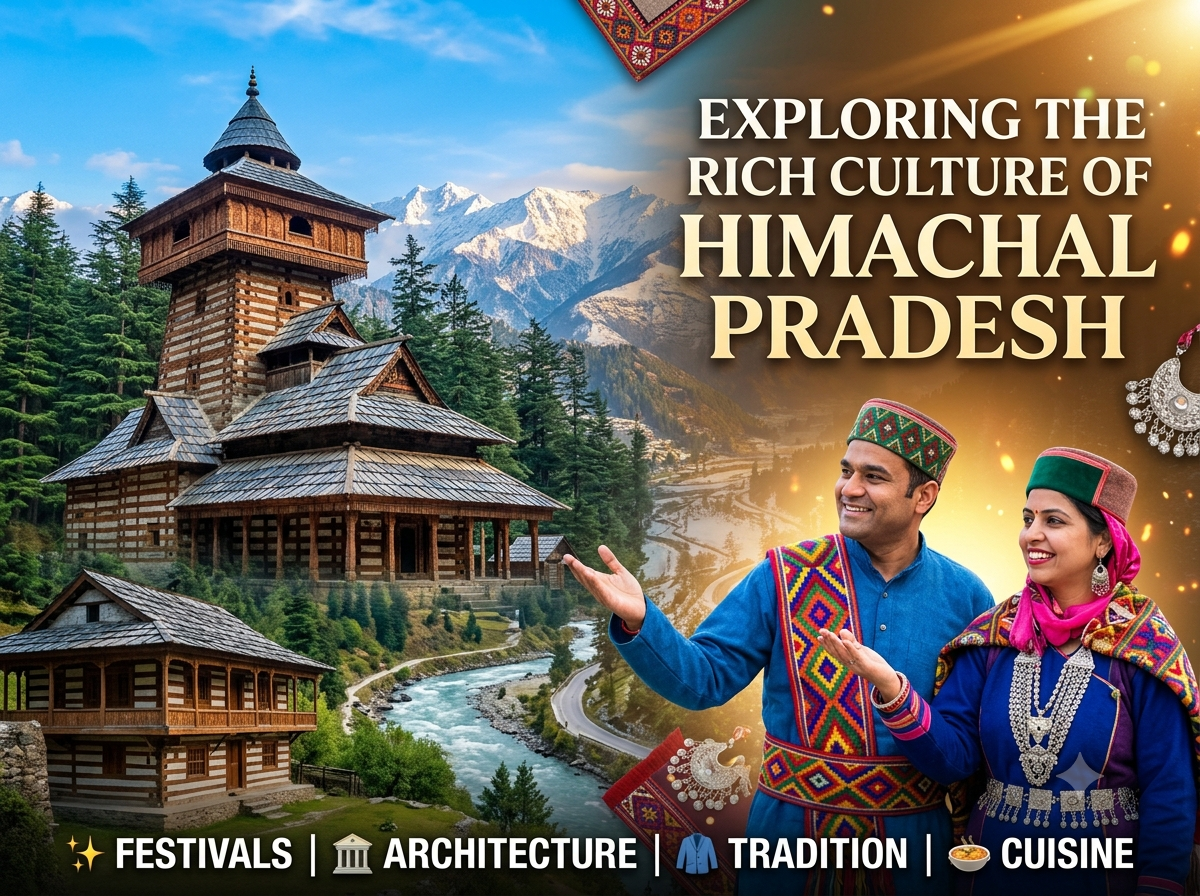
Himachal Pradesh, a picturesque state nestled in the northern part of India, is renowned for its stunning landscapes, majestic mountains, and serene valleys. But beyond its natural beauty lies a rich cultural heritage that has been shaped by centuries of history, traditions, and local customs. The culture of Himachal Pradesh is a delightful blend of the diverse influences from its geographical location, religious beliefs, and its indigenous people.
A Tapestry of Traditions
The culture of Himachal Pradesh is deeply rooted in its history, geography, and the traditions of its people. The state is home to various ethnic groups, including the Gaddis, Kinnars, and Lahaulis, each with their distinct languages, traditions, and way of life. These tribes have lived in the rugged terrains of the Himalayas for centuries, and their practices reflect a deep connection with nature and spirituality.
Festivals and Celebrations
Festivals play an integral role in Himachali culture, and each one is marked with vibrant celebrations, traditional music, and folk dances. The most famous festival is Dussehra, celebrated in the town of Kullu. Unlike other parts of India, where Dussehra marks the victory of Lord Rama over Ravana, in Kullu, the festival celebrates the victory of good over evil through grand processions and rituals. The festival is a spectacular display of local customs, with deities from various temples in the region being brought out in procession.
Other important festivals include Losar (Tibetan New Year), Makar Sankranti, Baisakhi, and Diwali. The region’s festivals are rich with religious significance and provide insight into the diverse belief systems that have flourished in Himachal Pradesh.
Traditional Music and Dance
Music and dance are at the heart of Himachali culture, with various folk forms that reflect the everyday lives and beliefs of the people. The traditional music often features instruments like the dhol, nagara, shehnai, and flute. The dances performed during festivals, rituals, and social gatherings are vibrant and colorful, adding to the cultural richness of the state.
The Nati, a popular folk dance of Himachal Pradesh, is performed by groups of men and women, often during weddings and festivals. Dancers form a circle or a line and sway to the rhythm of the music, creating a visual spectacle. Each region has its version of the Nati, reflecting local customs and traditions.
Art and Craftsmanship
Himachal Pradesh boasts a rich tradition of arts and crafts that have been passed down through generations. The state is known for its Pahari paintings, which are a type of miniature painting that depicts religious themes, court scenes, and nature. These paintings are characterized by their vibrant colors and intricate details.
The handicrafts of Himachal Pradesh are also highly valued. The famous Kullu shawls, Chamba rumals (embroidered cloths), and Kangra pottery are known for their quality and craftsmanship. These items are often created by local artisans and are sought after by collectors and tourists alike.
Cuisine: A Flavorful Experience
The food in Himachal Pradesh reflects its diverse cultural influences and the availability of local ingredients. Traditional Himachali cuisine includes a variety of hearty dishes, typically made from rice, lentils, vegetables, and meats. Chana Daal, Siddu, Chana Madra, and Dham (a traditional Himachali feast) are some of the popular dishes that you must try when visiting the state.
A unique feature of the food culture in Himachal is the use of local herbs and spices that give the dishes a distinct flavor. Dairy products, such as ghee and butter, are also heavily used in cooking, reflecting the importance of livestock in the local economy.
Architecture and Temples
The architecture of Himachal Pradesh is influenced by both Hindu and Buddhist traditions, evident in its temples, monasteries, and traditional houses. The wooden temples of Himachal, such as the Hadimba Temple in Manali and the Brijeshwari Temple in Kangra, showcase the intricate woodwork and sloping roofs typical of the region. These structures are designed to withstand the harsh mountain weather, blending beautifully with the natural surroundings.
The Buddhist monasteries in places like Spiti Valley and Lahaul are serene, spiritual havens, with ornate thangkas, murals, and stupas that add to the tranquil atmosphere of the region.
Modern Influences
While Himachal Pradesh remains rooted in its traditions, it has also embraced modern influences, particularly in urban centers like Shimla and Dharamshala. Shimla, once the summer capital of British India, still retains its colonial charm, with grand old buildings and tree-lined streets. Today, it is a popular hill station that attracts tourists from all over the world, bringing in new ideas while preserving the state's unique culture.
Dharamshala is home to the Tibetan government-in-exile, making it a significant center for Tibetan Buddhism. The presence of the Dalai Lama has influenced the local culture, and the fusion of Tibetan and Himachali culture is evident in the food, architecture, and religious practices of the region.
Conclusion
The culture of Himachal Pradesh is a fascinating tapestry of ancient traditions, spiritual beliefs, and local customs, all shaped by the unique geography and history of the state. From its colorful festivals and lively dances to its rich arts, crafts, and cuisine, Himachal Pradesh offers a glimpse into a culture that values nature, community, and spirituality. Whether you're visiting the temples, enjoying a traditional feast, or simply soaking in the beauty of the landscape, the cultural richness of Himachal Pradesh will leave you with unforgettable memories